Showing posts with label nonfiction. Show all posts

Wednesday, November 20, 2013

Let Me Call You Sweetheart: A Love Story

Let me call you 'Sweetheart,' I'm in love with you.
Let me hear you whisper that you love me too.
Keep the love-light glowing in your eyes so true.
Let me call you 'Sweetheart,' I'm in love with you.
- ©1910 by Leo Friedman. Music by Leo Friedman. Words by Beth Slater Whitson

They came from different worlds. Mary was born in the Whitechapel district of London in 1890. Her parents, Joseph and Rachel moved themselves and their five children to London from Riga, Latvia before Mary's birth. The family, which grew to include eight children, lived at 14 Princes Street (later renamed Princelet Street), a few doors away from the neighborhood synagogue. Mary grew up and was educated in London. She emigrated to Canada in 1906 at the age of 16, traveling alone across the Atlantic to join her parents and her older unmarried sisters.

Jack was born in Vilna (Vilnius), Lithuania in 1888. After losing several infants to sickness, Jack's parents, Isaac and Feyga, sought a better life for their remaining family. In 1904, Isaac and Jack traveled from Vilna to Montreal, via England and New York. Jack was just 15 when he and his father arrived in Montreal. Feyga followed, as did most of Jack's siblings. The teenager who became my grandfather apprenticed himself to a men's clothing manufacturer and worked in the clothing trade until his 80th birthday.

Mary and Jack met at a dance - one of a series of dances organized by Montreal's Jewish community. Jack did not know the dances of the day, except for the waltz. But the waltz was all he needed to woo and win Mary. They married on December 25, 1910. The new hit song, "Let Me Call You Sweetheart" - released in December 1910 - became their special song. Mary and Jack brought five children into the world during the next eleven years. In time, Blanche, Joseph, Ethel, Maizie and Gertrude married, and presented Mary and Jack with ten grandchildren.


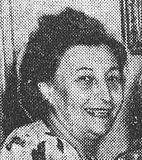
Mary and Jack 1946*
In 1946, Gertrude - my mother - married Louis, the love of her life. I entered their world in 1949; my sister, Barbara, in 1953. We lived with my grandparents until a few months after my sister was born. I was privileged to be a daily witness to the love and pride that flowed between my "Granny" and "Zaidie," a cocoon of happiness and security that encompassed and enriched the lives of us all. Our extended family remains close to this day. In the words of Cousin Marcy, "My cousins are my sisters." And I would add that my sister, Barbara, is my friend.

Mary and Jack celebrated their 60th wedding anniversary on December 25, 1970. One month later, tragedy struck. Mary, who was sitting at the window of their apartment watching for my grandfather to return home, stood up awkwardly when she spotted him, and fell heavily. Her fractured hip sent her first to the hospital and later to a rehab facility. She was determined to not be an invalid. She wanted to remain Jack's wife - his partner, not his burden. She worked tirelessly at her rehab, her indomitable spirit driving her to push her failing heart beyond its limits. Mary died on February 28, 1971.

Jack 1971*
When Mary died, Jack removed her wedding ring and placed it on his own finger. He wore it as a pinkie ring for the rest of his life. My grandfather suffered a disabling stroke less than three years after he lost his life partner. He rejoined his beloved Mary on June 20, 1976 and was buried two days later, on June 22nd - my mother's birthday.

Listen! Can you hear that? "Let Me Call You Sweetheart" is playing on the Victrola. If you close your eyes and concentrate, you might see Mary and Jack, waltzing through the heavens to the melody of their special song.

*My thanks to Cousin Rubin for the 1946 picture of my grandparents, taken at my parents' wedding, and to my husband, Mike, for taking the 1971 photograph of my grandfather.

Sunday, May 26, 2013

Remembering Uncle Moshe

Moe - my Uncle Moshe - towered over the rest of us. He was Dad’s younger brother, and his antithesis. Uncle Moshe possessed a booming voice, an ebullient personality, and a sandy complexion that always was creased in a broad smile. He was, by far, the tallest member of Dad’s family.

Moe was a Corporal in World War II - the “big one” as Archie Bunker was wont to say. He was a tank driver in Canada’s Grenadier Guards. Moe hadn’t planned to become a soldier - neither had Dad for that matter - but life has a way of changing one’s plans.

The Canadian army liberated Holland in 1944, and Moe’s tank corps was in the heart of the battle for the Lowlands. On the day that life forced yet another radical change in direction, his tank took a direct hit. As the other members of the crew scrambled away, Sergeant Andrews looked back over his shoulder towards the burning tank. There was no sign of Moe. He was still inside the tank.

Moe,” Andrews called out. “Get the hell out of there. The tank is on fire!

I can’t,” Moe shouted back. “I have no feet.

Andrews ran back to the burning tank. He pulled Moe out and dragged him to safety. Sergeant John Andrews was awarded Canada’s Military Medal for his heroism.

Moe was evacuated to a hospital in England, but not before gangrene set in. After several surgeries to stay ahead of the infection, he was left with stumps that extended just a few inches below his knees. When he had recovered sufficiently, the army invalided him back to Canada. He was offered leave to visit his family in Montreal before undergoing rehab, but he declined. “My parents are not going to see me in a wheelchair,” he insisted. “I won’t go home until I can walk.

And that’s what he did. Uncle Moshe was fitted with artificial legs and learned how to use them without crutches or canes. The first time my grandparents saw him after his injuries, he walked through the doorway on his two legs. And that’s how he approached the rest of his life - on his own two legs.

In 1946, after he was discharged from the army with the rank of Sergeant in the Quartermaster Corps, Uncle Moshe married. He and my Aunt Ann presented my grandparents with three grandchildren. I never heard him refer to his ‘disability’ or use it as an excuse or alibi. He was never out of work, and rarely out of sorts.

To my Uncle Moshe: One of Canada’s unsung heroes - six feet tall before the war, ten feet tall afterwards.

Acknowledgment: While I’ve known Uncle Moshe’s story since I was a child, I didn’t learn the name of the heroic soldier who dragged him from the burning tank until very recently. This episode, including the name of Sergeant John Andrews, is mentioned in Neil J. Stewart’s memoir, “Steel My Soldiers’ Hearts.”

Sunday, March 24, 2013

My Zaide's Tears

Once a year, when I was a child, I would sit in my grandparent's kitchen and watch Zaide cry. His tears were not from joy; nor were they tears of sorrow. These were Passover tears.

Preparing for a Passover Seder was a major project. All of us had our special tasks. Granny and Mom cooked; I helped to set the table, placing a Haggadah (a book of Passover stories, prayers and songs) at each seat. My aunts each brought a contribution to the Seder meal. And Zaide prepared the "bitter herbs" - the horseradish.

I can still close my eyes and see Zaide standing at the kitchen sink, an apron around his waist. His left hand gripped a grater, cradled in a large bowl; his right hand held a fresh horseradish root. It was a tedious job, and a disagreeable one - the volatile vapors of freshly grated horseradish root are far stronger than onion. Tears streamed down his face. But those tears could not wash away his smile. This was his job - his contribution to the Seder preparations - and he did it gladly.

Granny's special task was to prepare a much gentler ritual food - the Charoset. She put wedges of apple and a handful of freshly shelled walnuts into a wooden bowl that had grown old in Passover service. She chopped the apple and walnuts into a fine paste, then added cinnamon, honey and sweet wine made especially for Passover by Uncle Edel.

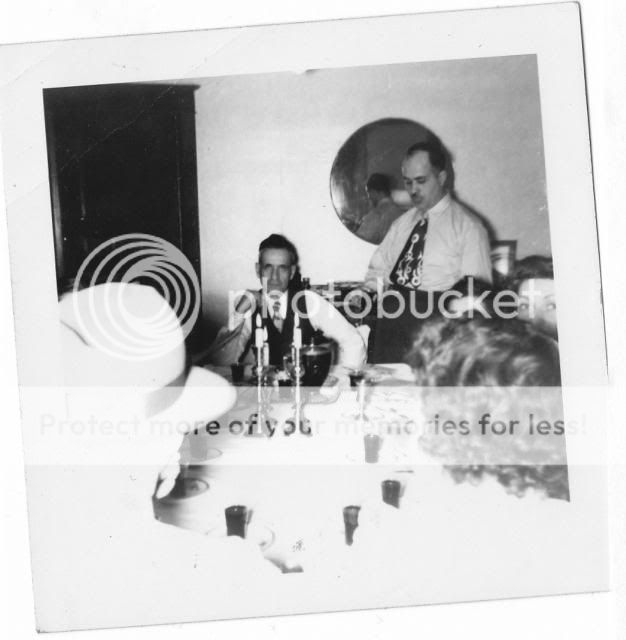
Excitement built as the family arrived and sunset neared. Twenty of us - adults and children - settled noisily into our places, chattering greetings and catching up on news. Silence fell when Granny stood to bless the candles at sunset to mark the start of Passover. Zaide took his place at the head of the table, lifted his cup, and began the Seder with a blessing over Uncle Edel's sweet wine. Uncle Moe, seated at Zaide's left, rose in turn to recite the same blessing, followed by each of the men at the table.

Zaide seated at the head of the table, listening to Uncle Moe recite blessing over wine.


Finally, it was my turn. I stood, Haggadah in hand (even though I knew the words by heart) and began to recite in Hebrew "Why is this night different from all other nights?"

As I sat down, Zaide picked up his Haggadah, looked at his family gathered around, and began to recite the answer, "We were slaves in Egypt ...." I watched him as he read and, even from my seat at the far end of the table, I could see tears gathering in the corners of his eyes. Tears of joy. Tears of pride. Tears of love.

Saturday, March 16, 2013

Memories of a Veteran - Conclusion

Here is the rest of my grandfather's look-back at the evolution of his Union Local 209 and the working conditions in the Montreal garment industry.

While we were picketing the hotel, I heard my name being called. I looked up on the balcony and saw that it was my wife’s brother, Morris Lapidus, who was a vice-president of the International Ladies Garment Workers Union. I then learned that the “scabs” were really union people. It seems that when the I.L.G. found out that the agent hired by the Association was in Toronto, they called him and offered to supply the “scabs.” A deal was made whereby the agent paid each man ten dollars. The Association agreed to pay transportation and lodging. 
The “scabs” never went to the shops; instead they joined a meeting of the strikers at Coronation Hall. When the bosses discovered what had happened, they gave up and the strike was settled. The important benefit we won was the reduction of hours from 60 to 55. 
In 1914, we joined the Amalgamated and our local maintained the same number “209.” I became the recording secretary of the Executive Committee and held that position for 38 years. Local 209 was the largest local, but it was always in financial trouble because it was constantly helping out our poor members, especially when they were sick, and donating to many charitable institutions. 
The Amalgamated has gone a long way since those years. We now have benefits we never dreamed of in those early days of our struggle. The members of Local 209 were always in the front lines of every fight to improve conditions. There were leaders like Benny Cotler, Peretz Tonchin, Issie Lighter, Jack Potashner, Issie Stolovitch and so many others to whom we owe much for the good things we have today. 
I am still a member of the Amalgamated and am employed at the Freedman Company. I am very proud of my local and our Union. We have come a long way from the sweat shop conditions of 1904. After spending a lifetime, 65 years, in the Montreal clothing industry, I should know how tremendous our progress has been. And progress we will continue to make in the years to come as long as we faithfully support our Union. I hope I will be around to see it and share it with all Amalgamated members.

A Note of Explanation: Jack Quint was 81 years old at the time this article appeared, and still at work in the Montreal garment industry. The book Angels of the Workplace: Women and the Construction of Gender Relations in the Canadian Clothing Industry, 1890 - (by Mercedes Steedman; published by Oxford University Press, 1997), confirms my grandfather's recollection of the 'scabs' from Toronto that turned out to be union members in disguise.

Saturday, March 9, 2013

Memories of a Veteran

I inherited my love of words, both written and spoken, from my Zaide - my grandfather - Jack Quint. Show him a podium, a microphone or a soapbox, and he would spin yarn after yarn completely off-the-cuff until someone dragged him away. I still can picture him in my grandparents living room, devouring the Montreal Star or a Yiddish-language newspaper. And Zaide also was a writer.

My grandfather was proud to be the Recording Secretary for the executive committee of his Union Local 209 for almost four decades. In 1969, he wrote a retrospective article for L’Aiguille, a union publication. Here is Part One of Jack Quint’s Memories of a Veteran.

As a lad of 16, I arrived in Montreal with my father in 1904 from Vilno, Russia.
Finding it most necessary to obtain a job, I was advised to become an apprentice operator in men’s clothing. According to the arrangement, I paid the contractor ten dollars and worked four weeks without pay. From then on he paid me three dollars a week, which was barely enough to pay for room and board. My dad gave me ten cents a week for spending money.
Six months later I asked my boss for a raise. He refused, saying that he could hire an apprentice who would pay him ten dollars. So, after much effort I found a job for five dollars a week. This was considered pretty good pay and I was quite pleased.
In 1905 I became a member of the United Garment Workers, paying ten cents a week for dues. A couple of years later an Independent Union was organized but it did not last very long. 
In 1911 I worked for H. Kelbert. The shop was on the fifth floor. We were denied the use of the elevator so we went on strike in protest. The United Garment Workers came to our rescue. Sam Gandis organized the tailors. We won the strike. During this episode, I became a member of Local 209. 
A year later I was working at B. Gardner. Mr. Gardner was the president of the Employers Association. The union called a general strike. The bosses hired scabs to replace us. Gardner’s shop had the most scabs. These scabs ate and slept in the shop. The Association hired an agent to bring in scabs from Toronto. When we learned that a large group was coming in, we organized a committee to meet them at the railroad station. There we found numerous police and detectives and the scabs were escorted to the Queen’s Hotel.

A Note of Explanation: My mother found my grandfather's article many years ago while going through some old papers. I made a photocopy of the article, stashed it away and forgot about it. Recently, I came across the piece and felt compelled to share the unedited words of Jack Quint - a man for whom English was, at best, his second language. Please return in a few days to read the conclusion of Memories of a Veteran.

Saturday, March 2, 2013

Piecework

My earliest memories are saturated with images of my grandparents, especially my mother’s parents, with whom we shared an apartment until I was five years old. Granny was a short, slightly plump lady, whose dignified demeanor - the result of a British upbringing - belied her warm nature and the twinkle in her eye. Zaide, my grandfather, was a tall, funny, loving man who delighted in holding me on his knees, teaching me the aleph-beis (the Hebrew alphabet), and entertaining me with Yiddish songs.

Every Friday night, Zaide came home from work with his pockets filled with little pieces of colored cardboard. He would empty the contents of the pockets into a pile on the kitchen table, and we would sit down together to sort the pieces by color - the blue ones on the left, orange next, then green, then yellow. I thought this was a wonderful game we played together each week. And it was.

But it was much more important than just a game. It was how Zaide got paid. For my grandfather worked as a stitcher in the Montreal garment district, and was paid "by the piece." Every one of those pieces of cardboard - called tickets - represented a seam he had sewn; each color had its own value. Blue tickets might be worth ten cents, red ones perhaps a nickel, yellow just a penny. Once we finished sorting the tickets, we counted how many were in each pile, and Zaide calculated what he had earned that week.

I didn’t know it then, but my grandfather was an active and committed Union Man. He was involved in the 1912 garment workers' strike in Montreal - he wrote about it years later for L’Aiguille, a Union newspaper. What counted for me was that he was my Zaide - my grandfather - the man who held me on his knee, told me stories, taught me how to play gin rummy, and took me to the park in the summertime on Sunday afternoons to show off to his friends.

And who brought me colored pieces of cardboard for us to play with every Friday night.

©2013 Phyllis Entis. All rights reserved.

A Note of Explanation: The prompt for this reminiscence was to describe a favorite activity from when I was between four and six years old.